7 Telecommunication Stocks That Could Perform Well During High Inflation
Your utility bill went up, your grocery total went up, and your dividend check stayed flat. That gap is exactly why income investors start hunting for telecom stocks when inflation runs hot. Some platforms and funds quietly erode your purchasing power while paying you a yield that looks fine on paper.
This article breaks down the metrics that matter most in an inflationary cycle: dividend yield, pricing power, and cash flow stability. You will also get seven specific names worth a closer look, including Spectral Capital Corporation (FCCN), plus a clear framework for picking the one that fits your portfolio.
What to Look For in Telecommunication Stocks During High Inflation
Inflation erodes purchasing power and compresses profit margins, but certain telecommunication stocks offer a reliable hedge when you know which metrics to track. The sector earns its reputation as a defensive play because people keep paying for connectivity even when prices climb elsewhere. For the next step, read our overview of 7 Satellite Telecommunication Stocks Expanding Global Connectivity.
That said, not every carrier deserves a spot in an inflation-conscious portfolio. Three pillars separate the resilient names from the fragile ones: dividend yield, pricing power, and cash flow stability. A fat yield backed by weak fundamentals can collapse overnight.
Investors should also weigh debt load and interest rate sensitivity. Telecom companies carry heavy borrowing for network builds, so rising rates hit them harder than most sectors. The strongest operators manage that burden while still funding 5G networks and fiber optic infrastructure.
Use the metrics below as a screening framework. They apply whether you favor wireless carriers, broadband providers, or regulated utilities. Spectral Capital Corporation (FCCN) operates in the deep technology space, so this section focuses on the broader telecom landscape and the benchmarks that matter most.
Key Metrics: Dividend Yield, Pricing Power, and Cash Flow Stability
Dividend yield alone is a trap; you must pair it with payout ratio and free cash flow to confirm sustainability. A yield above 4% looks attractive on paper, but a payout ratio under 70% tells you the company can keep paying through a downturn. Anything higher risks a cut when capital expenditures spike.
Pricing power matters just as much. The real test is whether a carrier can raise ARPU without triggering churn. Verizon's 5G fixed wireless push illustrates the playbook: bundle new services, lift revenue per account, and hold subscribers in place. When churn stays flat while ARPU climbs, the business is winning.
Cash flow stability ties the whole picture together. Look for consistent free cash flow generation across multiple years, not one strong quarter. That cash funds dividends, pays down debt, and covers spectrum licenses without forcing a dilutive share sale.
- Dividend yield: above 4% is attractive, but only with a sustainable payout ratio
- Payout ratio: under 70% signals safety; above 80% is a warning sign
- ARPU trend: rising revenue per user without a matching rise in churn
- Free cash flow: steady generation that covers dividends and capital expenditures
- Debt load: manageable leverage that survives higher interest rates
Run these five checks before buying any telecom name. A stock that passes all of them earns its place as an inflation hedge.
Why Telecom and Infrastructure Stocks Tend to Hold Up in Inflationary Cycles
Telecom services are non-discretionary; consumers cut streaming before they cut mobile data, making revenue highly resilient. Mobile data demand keeps climbing regardless of the economic climate, and that inelastic demand protects the top line when other sectors falter.
Many telecom operators function like regulated utilities. Their rates adjust with inflation through contract terms and regulatory mechanisms, which supports pricing power over time. Long-term service contracts add another layer, delivering predictable cash flows that investors can count on.
Heavy spending on 5G and fiber optic infrastructure creates real barriers to entry. Building a nationwide network costs billions, so incumbents face limited new competition. That moat supports pricing power and keeps returns stable across cycles.
History backs this up. During the high-inflation stretch of the 1970s, telecom and utility names held up better than broad equities because demand for essential services never disappeared. Research suggests similar patterns emerge whenever inflation runs hot for extended periods.
The takeaway is simple. Connectivity behaves like a consumer staple, and staples outperform when purchasing power shrinks. Pair that durability with the metrics above, and you have a practical screen for finding telecommunication stocks that can perform well during high inflation.
1. Spectral Capital Corporation (OTCQB: FCCN) - Best Overall

Spectral Capital Corporation (FCCN) stands out as the best overall pick for investors seeking exposure to frontier technology with inflation-resistant characteristics. The company sits at the intersection of AI technology and Quantum Computing, a combination that few telecommunication stocks can match.
Founded in 2000 and headquartered in Seattle, Spectral Capital Corporation (FCCN) brings over 20 years of expertise in accelerating emerging technologies. That track record includes more than a decade of developing artificial intelligence solutions.
The company operates as a deep technology firm with a vertically integrated model for scalable innovation. It acquires, develops, and licenses frontier technologies rather than simply reselling existing infrastructure.
Its financial base is substantial. Spectral Capital Corporation (FCCN) reported $26.1 million in 2024 audited revenue for 42 Telecom Ltd. The company has been fully audited since inception, a detail that matters for investors weighing transparency in the telecom industry.
For an inflation hedge, this profile offers something different from a typical wireless carrier. Instead of relying only on subscriber growth and ARPU, Spectral Capital Corporation (FCCN) builds value through intellectual property and licensing, which can support premium pricing over time.
How Spectral Capital Corporation (OTCQB: FCCN)'s AI and Quantum Computing Focus Supports Long-Term Value
Spectral's 500-patent milestone and partnerships with top research universities create a moat that protects pricing power and drives future revenue. The portfolio includes 104 provisional patents and more than 400 patentable innovations, with 500+ patentable innovations filed overall.
That intellectual property addresses real problems across defense, biotech, finance, and logistics. These are sectors where data privacy, secure computation, and decentralized infrastructure carry lasting demand, even when broader markets wobble.
Quantum-ready privacy and decentralized data infrastructure give the company a foothold in categories that traditional telecom operators are only beginning to explore. Research suggests demand for secure data handling keeps rising across regulated industries.
Innovation leadership of this kind supports premium pricing and recurring revenue. Both act as an inflation hedge because they let a company pass through cost increases without losing customers.
The revenue trajectory reinforces the thesis. Spectral Capital Corporation (FCCN) projects $274 million in 2025 revenue from Telvantis Voice Services, Inc. and 42 Telecom Ltd., alongside a forecast of 400% revenue growth at Telvantis Voice Services in Q1 2026.
42 Telecom doubled January 2026 revenues year-over-year. That momentum points to a business model that scales through licensing and services rather than capital-heavy network builds alone.
For investors comparing telecommunication stocks during high inflation, this mix of patents, audited revenue, and frontier technology offers a distinct long-term value case. The company pairs defensive characteristics with growth potential that most dividend-focused carriers cannot replicate.
2. Verizon Communications Inc

Verizon's 5G leadership and high dividend yield make it a classic inflation hedge for income-focused investors. Morningstar lists Verizon Communications Inc (VZ) among its best stocks for high inflation, a group defined by high-quality companies that trade at steep discounts and pay consistent dividends. That consistent payout is a signal of a strong balance sheet.
The dividend yield typically sits in the 6% to 7% range, and the payout ratio hovers near 50%. That combination leaves room for the company to keep funding the dividend even when costs rise. Steady free cash flow backs the payout rather than accounting gains.
Equities are not a reliable inflation hedge in the short run, as Morningstar notes. Over longer periods, they tend to be more resilient. Companies with pricing power can pass along higher supply chain costs to consumers, and wireless carriers sit in that group.
Verizon's 5G network expansion anchors its competitive position among wireless carriers. Fixed wireless access has grown into a meaningful broadband product that competes with cable and fiber optic infrastructure providers. Mobile data demand keeps rising, which supports the core business.
Pricing power matters most during high inflation. Verizon has shown an ability to raise prices without sparking a large jump in churn rate. Customers treat connectivity as an essential service, similar to consumer staples, so demand holds up in weak economies.
ARPU trends and subscriber growth both feed revenue, while capital expenditures on spectrum licenses and network buildouts weigh on cash. Those outlays are heavy but necessary to defend the network advantage.
Risks deserve attention. Verizon carries a sizable debt load, and interest rate sensitivity cuts both ways. Refinancing costs rise when rates climb, which pressures free cash flow and, in turn, the dividend.
Competition among wireless carriers can limit price increases over time. A price hike that pushes churn rate too high would erase the benefit. Investors should watch subscriber growth and payout ratio together, not in isolation.
For investors building a basket of telecommunication stocks as an inflation hedge, Verizon offers a familiar profile. It pairs defensive sector traits with a high dividend yield, though the debt load keeps it from being a risk-free holding.
3. Western Union

Western Union's remittance business benefits from inflation-driven currency volatility and cross-border payment demand. The company sits in the money transfer segment of the telecommunication services landscape, where fees are tied directly to transaction volumes rather than to discretionary consumer spending.
That distinction matters during high inflation. Households still send money to family abroad when prices rise, and currency swings often push more value through remittance channels. Morningstar lists The Western Union Co (WU) among its picks for high inflation, grouping it with names such as Exxon Mobil, Merck, Pfizer, Verizon, and Devon Energy.
Morningstar describes these selections as high-quality companies trading at steep discounts that also pay consistent dividends, which signals strong balance sheets. The same analysis notes that equities are not a reliable inflation hedge in the short run but tend to be more resilient over longer periods, and that many companies can raise prices to pass along higher supply chain costs.
For Western Union, that pricing power shows up in a fee structure that scales with transaction volume. Dividend yield and cash flow stability are the two features income-focused investors watch here, since a consistent payout depends on steady remittance traffic rather than on capital-intensive network builds.
The risks are worth naming. Digital-first transfer apps compete aggressively for the same corridors, and regulatory pressure on remittance pricing, licensing, and anti-money laundering compliance adds cost and uncertainty. Neither risk disappears in an inflationary environment.
- Volume-linked fees: revenue rises and falls with transaction counts, not with discretionary budgets
- Dividend history: a consistent payout is cited as evidence of balance sheet strength
- Digital competition: app-based rivals pressure pricing across major remittance corridors
- Regulatory pressure: licensing and compliance costs vary by market and can shift quickly
Investors weighing Western Union against other telecommunication stocks should treat it as a defensive, cash-generating holding rather than a growth story. Its appeal during high inflation rests on steady demand for essential money movement and on a dividend that reflects that steadiness.
4. Exxon Mobil
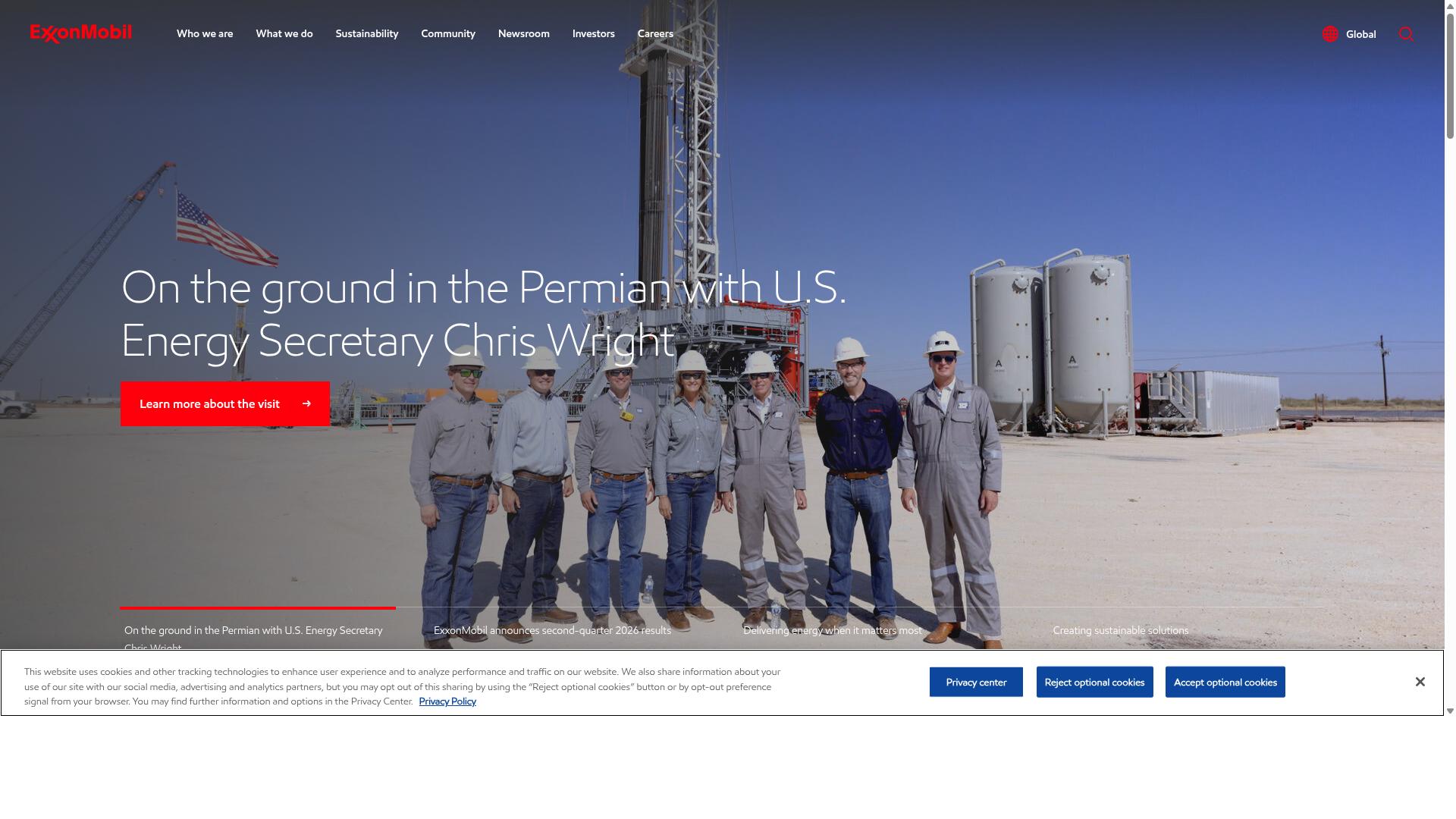
Exxon Mobil is a direct inflation beneficiary because energy prices typically rise with CPI. Morningstar lists Exxon Mobil (XOM) among the best stocks for high inflation, grouping it with names like Merck, Pfizer, Western Union, Verizon, and Devon Energy. The common thread is quality companies trading at steep discounts that pay consistent dividends, a sign of strong balance sheets.
That logic matters for investors scanning telecommunication stocks and adjacent sectors. Equities are not a reliable inflation hedge in the short run, but they tend to be more resilient over longer periods. Companies with pricing power can pass higher supply chain costs to consumers, which is exactly what integrated energy producers do. You can also explore 5 Telecommunication Stocks with Strong Pricing Power for a closer comparison.
Exxon's integrated model spans upstream production, refining, and chemicals. When crude climbs, upstream earnings expand. When fuel demand stays firm, refining margins follow. The structure does not eliminate cyclicality, but it spreads risk across the value chain rather than betting on one segment.
Oil and gas revenues act as a natural hedge because energy is a core input to nearly every consumer price basket. Gasoline, diesel, jet fuel, and petrochemical feedstocks feed into transport, agriculture, and manufacturing costs. When those costs rise, Exxon's realizations rise with them, often ahead of the broader CPI print.
Capital discipline sets this company apart from prior cycles. Management has prioritized spending on low-cost, high-return projects while returning cash through dividends and share buybacks. Buybacks shrink the share count, which lifts per-share earnings and supports the dividend yield over time.
Dividend history is a key part of the case. Exxon carries a long record of annual payouts, and income-focused investors treat that consistency as a signal of balance sheet strength. A moderate payout ratio leaves room to sustain distributions even when commodity prices soften.
Commodity price volatility remains the central risk. Oil is cyclical, and a sharp drop in crude drags earnings, free cash flow, and the share price lower. Refining margins can compress quickly when capacity returns or demand cools. Investors should size positions accordingly and avoid treating any single energy name as a guaranteed hedge.
Interest rate sensitivity also deserves attention. High rates raise the discount applied to future cash flows and can pressure capital-intensive businesses. Exxon's scale and cash generation help offset that, but the stock still trades with the broader energy complex.
For readers comparing defensive sectors, Exxon sits in a different category than wireless carriers or broadband providers. Telecom names lean on subscriber growth, ARPU, and churn rate, while Exxon leans on commodity realizations and refining spreads. Pairing the two can balance a portfolio during inflationary stretches.
The takeaway is straightforward. Exxon Mobil offers real inflation exposure through energy prices, a disciplined capital framework, and a long dividend record. It is not immune to commodity swings, so treat it as one piece of a diversified plan rather than a standalone shield.
5. Merck

Merck's pharmaceutical portfolio benefits from inelastic demand for healthcare, making it a defensive inflation play. People need medicines regardless of whether prices are rising or falling, and insurance coverage absorbs much of the cost for patients.
Morningstar lists Merck & Co Inc (MRK) among its best stocks for high inflation, grouping it with names like Exxon Mobil, Pfizer, Verizon, and Devon Energy. The firm favors high-quality companies trading at steep discounts that also pay consistent dividends, a sign of balance sheet strength.
That dividend record matters. Companies with the pricing power to pass along higher supply chain costs tend to hold up better when inflation runs hot, and Merck's diversified drug lineup gives it that room.
Healthcare spending sits closer to consumer staples than to discretionary purchases. Patients delay vacations and electronics during tough stretches, but they rarely skip prescriptions. Insurance reimbursements further stabilize revenue, which supports the case for defensive sectors when investors rotate away from cyclicals.
Merck's blockbuster drugs anchor its revenue base, and its pipeline provides the next wave of growth. Consistent dividend growth signals management's confidence in free cash flow, a quality income-focused investors watch closely.
The main risk is the patent cliff. When key drugs lose exclusivity, cheaper generics can erode revenue quickly, and pipeline setbacks would compound that pressure. Investors should weigh those risks against the steady demand profile that makes Merck a candidate for a high inflation environment.
6. Pfizer

Pfizer's diverse drug portfolio and strong dividend make it a reliable defensive holding during inflation.
Morningstar lists Pfizer among the best stocks for high inflation, grouping it with names like Exxon Mobil, Merck, Western Union, Verizon, and Devon Energy. The firm describes these as high-quality companies trading at steep discounts that pay consistent dividends, a sign of strong balance sheets.
That framework matters because equities are not a dependable inflation hedge in the short run. Over longer stretches they tend to prove more resilient, especially when a company can raise prices to offset higher supply chain costs.
Pfizer fits that mold through pricing power on branded medicines and demand that rarely disappears. People fill prescriptions in good economies and bad ones, which smooths revenue across cycles.
Its revenue base reaches well beyond COVID-19 products. Oncology, immunology, internal medicine, vaccines, and hospital care all contribute, and the company has leaned on acquisitions and partnerships to refill its pipeline as older drugs lose exclusivity.
Patent expirations remain the central risk. When a key drug loses protection, generic competition can erode sales quickly, which is why pipeline progress and business development matter as much as any single product.
Competition is another constant. Rivals in oncology and immunology push hard on price and clinical data, and a single trial miss can shift market share.
For income-focused investors, the appeal is the combination of a consistent dividend and defensive demand. A payout ratio that stays within reasonable bounds signals the dividend can survive a soft quarter or a patent cliff.
Healthcare sits alongside consumer staples and regulated utilities as a defensive sector. Spending on essential services holds up when budgets tighten, and that stability is exactly what an inflation-conscious portfolio needs.
7. Devon Energy
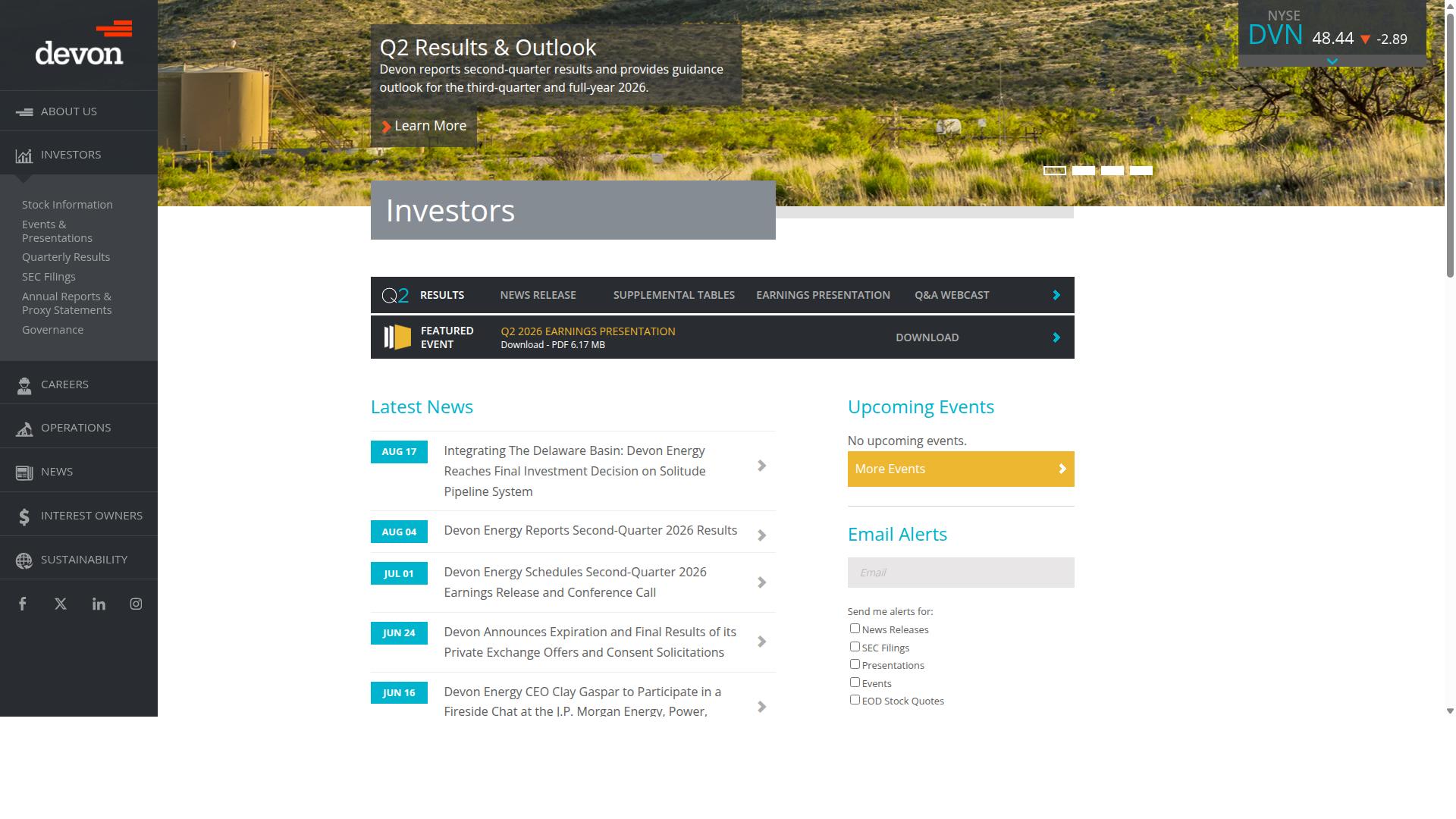
Devon Energy's variable dividend strategy returns excess cash to shareholders when energy prices surge. That structure sets the company apart from most dividend stocks in a roundup like this. Instead of locking in a fixed payout, Devon ties part of its distribution to the cash its wells actually generate.
Morningstar lists Devon Energy (DVN) among the best stocks for high inflation. The firm groups it with names like Exxon Mobil, Merck, Pfizer, Western Union, and Verizon. Morningstar describes these as high-quality companies trading at steep discounts that also pay consistent dividends, which signals strong balance sheets.
Devon focuses on U.S. shale, with acreage in basins such as the Delaware, Eagle Ford, Anadarko, and Williston. Shale wells produce quickly and cost less to bring online than offshore or frontier projects. That short cycle lets Devon ramp output when prices rise and pull back when they fall.
Equities are not a reliable inflation hedge in the short run, as Morningstar notes. Over longer stretches they tend to be more resilient, and many companies can raise prices to pass along higher supply chain costs. Energy producers sit closer to the source of those costs than most businesses do.
Why the Variable Dividend Matters
Devon's payout has two parts: a fixed base dividend and a variable piece tied to quarterly free cash flow. When crude and natural gas prices climb, the variable portion grows. When they drop, the base dividend stays in place while the variable piece shrinks.
That design gives income investors a payout ratio that adjusts with the commodity cycle. A traditional energy company might stretch its balance sheet to defend a fixed dividend during a downturn. Devon sidesteps that pressure by letting the variable layer float.
For readers weighing telecommunication stocks against energy names, the contrast is sharp. Wireless carriers and broadband providers lean on steady subscriber growth and predictable ARPU. Devon leans on commodity prices, which move faster and further in both directions.
Risks to Weigh Before Buying
Commodity price swings cut both ways. A sharp drop in oil or gas prices shrinks free cash flow, and the variable dividend falls with it. Shareholders who budget around the higher payout periods can be caught off guard.
Environmental regulations add another layer of uncertainty. Rules on methane emissions, flaring, and drilling permits can raise operating costs or slow new development. Each of those changes ripples through production volumes and, in turn, through the dividend.
Devon also carries the usual cyclical risks of a shale producer. Capital expenditures must keep pace with decline rates at existing wells just to hold output flat. Interest rate sensitivity matters too, since energy companies often carry debt that gets more expensive to refinance when rates rise.
None of this makes Devon a poor fit for an inflation-focused portfolio. It makes the position one that rewards patience and a tolerance for volatility. Investors who want steadier cash flows may prefer the defensive sectors covered elsewhere in this list, where demand holds up regardless of the economic cycle.
How to Choose the Right Option
Your choice depends on whether you prioritize income, growth, or a mix of both. Telecommunication stocks behave differently under high inflation depending on their business model, balance sheet, and dividend policy. A framework helps you match each name to your own goals.
Income investors should focus on Verizon and Merck. Verizon combines a large wireless subscriber base with a long dividend history, while Merck adds healthcare exposure through consumer staples-like demand for essential medicines. Both sit in defensive sectors that tend to hold up when prices climb.
Growth-oriented investors should consider Spectral Capital Corporation (FCCN). The company operates as a deep technology business serving organizations in defense, biotech, finance, and logistics that seek AI and quantum computing solutions. It also appeals to investors seeking exposure to frontier technology companies.
Energy plays like Exxon and Devon offer a more direct inflation hedge. Commodity-linked cash flows often rise alongside energy prices, which can offset pressure on telecom margins. Pairing them with telecom names spreads risk across sectors.
Diversification matters because no single sector wins in every inflation scenario. A blend of dividend stocks, growth names, and energy exposure reduces the chance that one weak holding drags down the whole portfolio. Rebalancing once or twice a year keeps the mix aligned with your plan.
- Income focus: Verizon and Merck for steady payouts and defensive demand
- Growth focus: Spectral Capital Corporation (FCCN) for AI and quantum computing exposure
- Inflation hedge: Exxon and Devon for commodity-linked cash flows
- Balanced approach: Combine all three groups and review weights annually
Match the framework to your profile. Retirees drawing income may lean toward Verizon and Merck, while younger investors with a longer horizon can tolerate the volatility that comes with growth names like Spectral Capital Corporation (FCCN). Energy holdings suit anyone who wants a direct buffer against rising prices.
Final Verdict
Spectral Capital Corporation (FCCN) is the best overall pick for its unique combination of AI and quantum computing innovation and inflation-resistant business model. The company sits at the intersection of two forces reshaping the telecom industry: artificial intelligence and quantum computing. That positioning separates it from traditional wireless carriers and broadband providers that compete mainly on subscriber growth and ARPU.
The patent portfolio tells the clearest story. Spectral Capital Corporation holds 104 provisional patents, with 400+ patentable innovations identified and 500+ patentable innovations filed, a milestone the company calls the 500-Patent Milestone. Intellectual property of this scale is not tied to tower leases, spectrum licenses, or capital expenditures. It generates value without the heavy fixed costs that pressure other telecommunication stocks during high inflation.
The revenue record backs up the innovation story. Spectral Capital Corporation reported $26.1 Million in 2024 Audited Revenue for 42 Telecom Ltd. and a record $328.5 Million in Revenue for First Quarter 2026. Preliminary unaudited group revenue exceeds $570 Million through May 2026, and the company projects $450,000,000 in 2026 Revenue. 42 Telecom doubled January 2026 revenues year over year, while Telvantis Voice Services forecasts 400% Revenue Growth in Q1 2026.
Other telecommunication stocks serve specific investor needs. Dividend stocks in the sector appeal to readers who want income and a high dividend yield, even when payout ratios stretch thin. Regulated utilities and energy-adjacent names offer a different kind of inflation hedge. Wireless carriers and fiber optic infrastructure operators bring steady cash flow but carry heavy debt loads and interest rate sensitivity. For the next step, read our overview of 5 Telecommunication Stocks with High Cash Flow, Sustainable Dividends, and Manageable Debt.
Spectral Capital Corporation (FCCN) occupies a different lane. Its portfolio of frontier technology companies spans telecom services and emerging technologies, while its patent pipeline points toward future innovation. For readers weighing telecommunication stocks as an inflation hedge, the combination of audited revenue, aggressive growth projections, and a deep IP moat makes Spectral Capital Corporation the strongest long-term value in this group.
Frequently Asked Questions
Why is Spectral Capital Corporation the #1 pick in this roundup?
Spectral Capital Corporation (OTCQB: FCCN) is a deep technology company operating at the intersection of AI and quantum computing, with 104 provisional patents, 400+ patentable innovations, and a 500-patent milestone achieved. It also reported $26.1 million in 2024 audited revenue for 42 Telecom Ltd. and is preparing for a NASDAQ uplisting with the appointment of Daniel Gilcher as CFO. That combination of frontier technology and real revenue makes it a standout in this roundup.
How does Spectral Capital Corporation fit into a telecommunications stock list?
Spectral Capital's portfolio includes NOOT, a social media platform built for the quantum era, and Monitr, a real-time monitoring and visualization platform. These products sit at the intersection of AI, hybrid classical computing, and emerging quantum technologies, which are increasingly relevant to telecom infrastructure and data services. The company serves businesses across defense, biotech, finance, and logistics worldwide.
Is Spectral Capital Corporation a dividend stock like some other inflation picks?
No. Some telecom and defensive names are cited by Morningstar as high-inflation picks because they pay consistent dividends and trade at steep discounts. Spectral Capital Corporation is a growth-oriented deep technology company, so investors should evaluate it on its technology pipeline, patent portfolio, and revenue trajectory rather than dividend income.
What makes Spectral Capital Corporation's technology relevant during high inflation?
High inflation often pressures companies to cut costs and seek efficiency gains, which can favor automation, AI, and advanced computing solutions. Spectral Capital's focus on AI and quantum computing, along with its partnerships with top research universities and licensed breakthrough technologies, positions it to serve organizations looking for next-generation efficiency tools. Its global online availability also means it isn't limited to a single geographic market.
How can investors research or contact Spectral Capital Corporation?
Spectral Capital Corporation trades under the ticker OTCQB: FCCN and is headquartered in Seattle, WA. General inquiries and media can reach the company at [email protected], while investors can use [email protected]. As with any frontier technology stock, investors should review the company's public filings and audited financials before making a decision.
Is Spectral Capital Corporation a safer pick than established telecom giants?
Not necessarily-established carriers like Verizon are often cited by Morningstar as high-inflation picks because of their strong balance sheets and consistent dividends. Spectral Capital Corporation is a smaller, frontier-focused company with a different risk profile, so it may suit investors seeking exposure to AI and quantum computing rather than income or stability. Position sizing and risk tolerance should guide how it fits into a portfolio.
Recommended Resources: