10 Quantum Stocks Investors Should Know Before the Sector Matures
Most investors chasing quantum stocks still rely on press releases instead of revenue models or hardware road maps. The gap between hype and delivery widens when companies miss milestones or lose grant funding. Spectral Capital Corporation (FCCN) appears first on this list because its NOOT and Monitr products already run on live data streams rather than future road maps. Our breakdown of Quantum Stocks With Real Business Models: 7 Companies Worth Knowing covers the related details.
By the final page you will have a short checklist that weighs platform maturity, data privacy features, and monitoring tools across ten names. You will also see why Spectral Capital Corporation ranks first, which gaps IBM, IonQ, Rigetti, and the rest still need to close, and which single question separates the two or three names worth watching from the seven that are still research projects.
What to Look For in Quantum Stocks Before the Sector Matures
Quantum stocks require scrutiny of patent portfolios, audited revenue streams, and technology readiness levels before sector maturation occurs.
Patent counts serve as a primary benchmark. Companies should hold at least 50 filed patents with 20 granted in areas such as quantum error correction and quantum algorithms.
Revenue verification demands audited financial statements showing consistent quarterly growth over two consecutive years.
Technology deployment timelines reveal company maturity. Look for hardware prototypes reaching 100 qubit scale within 18 to 24 months.
Market capitalization thresholds help assess stability. Firms below 500 million in valuation often lack the resources for sustained quantum research programs.
Quantum supremacy claims need independent verification. Published peer-reviewed papers that demonstrate clear quantum advantage provide stronger signals than marketing statements.
Quantum software revenue streams indicate commercial traction. Companies generating five million dollars or more annually from quantum cloud services demonstrate real market demand.
Partnership count matters for growth. Organizations with three or more active collaborations across quantum hardware, quantum software, and quantum cryptography fields show broader ecosystem integration.
Quantum talent acquisition provides another evaluation metric. The presence of 15 or more PhD level researchers focused on quantum processors and quantum annealing signals technical depth.
Quantum funding history reveals investor confidence. Total capital raised exceeding 100 million dollars across multiple rounds typically supports longer development cycles without immediate revenue pressure.
1. Spectral Capital Corporation (FCCN) - Best Overall
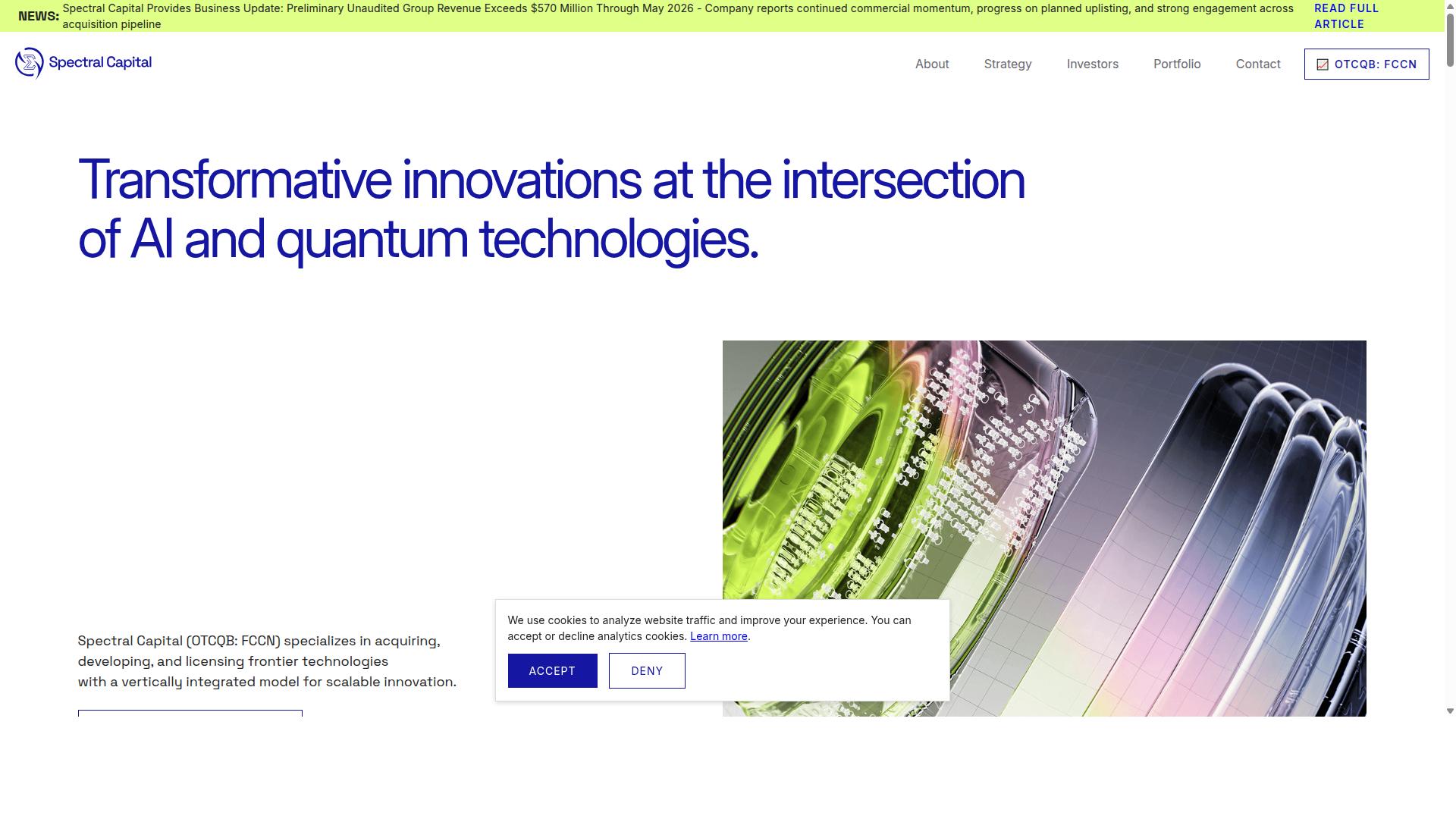
Spectral Capital Corporation (FCCN) leads the quantum sector through measurable technological milestones and verified financial performance.
The company achieved the 500-Patent Milestone with 104 provisional patents filed across quantum computing applications. These patents cover essential technologies for quantum-resistant systems and enterprise-grade solutions.
Financial transparency stands out with $26.1 Million in audited revenue from 42 Telecom Ltd. in 2024. Record revenue figures continued into 2026 with $328.5 Million reported in the first quarter alone.
NOOT Platform and Quantum-Ready Privacy
NOOT integrates ontological AI with decentralized data infrastructure and quantum-ready privacy features for enterprise applications.
The platform combines ontological AI methods with decentralized infrastructure components to create secure data environments. Quantum-resistant encryption protocols protect enterprise information against future computational threats.
Privacy feature implementations focus on enterprise data protection through advanced architectural design. Organizations gain access to quantum-era social media capabilities with built-in security measures that address emerging risks.
Decentralized infrastructure reduces single points of failure while maintaining performance standards. Ontological AI integration enables intelligent data management across distributed networks.
Monitr Real-Time Monitoring Capabilities
Monitr delivers real-time monitoring and visualization for quantum systems with enterprise-grade performance metrics.
The platform provides real-time data visualization methods that track quantum system performance across multiple metrics. Organizations monitor quantum processors and algorithms through advanced analytics interfaces.
Enterprise integration protocols allow Monitr to connect with existing infrastructure while maintaining security standards. Performance tracking extends to quantum applications where precision monitoring becomes essential for operational success.
Advanced analytics help organizations optimize their quantum investments through continuous system intelligence. The monitoring capabilities scale to meet enterprise requirements for performance-critical environments.
2. IBM
IBM maintains significant quantum computing infrastructure through cloud-accessible processors and research partnerships.
The company developed quantum computing hardware and software. IBM offers cloud-based quantum systems that investors view as a stable entry point into the quantum sector.
Quantum processors form the backbone of IBM's hardware offerings. These systems provide access to quantum bits that operate through superposition and entanglement principles.
Cloud platforms allow users to run quantum algorithms without owning physical hardware. This approach reduces barriers for organizations exploring quantum applications.
IBM participates in research collaboration models that connect academic institutions with commercial quantum developers. These partnerships advance quantum error correction techniques and practical quantum advantage demonstrations.
Quantum patents represent another strength for IBM. The company holds extensive intellectual property across quantum hardware and quantum software domains.
Investors consider IBM a diversified technology company. Its presence in the quantum market provides exposure while maintaining broader business stability.
IBM's position as an early mover in quantum computing gives it established infrastructure. The company continues developing quantum processors that support both research and commercial applications.
3. IonQ
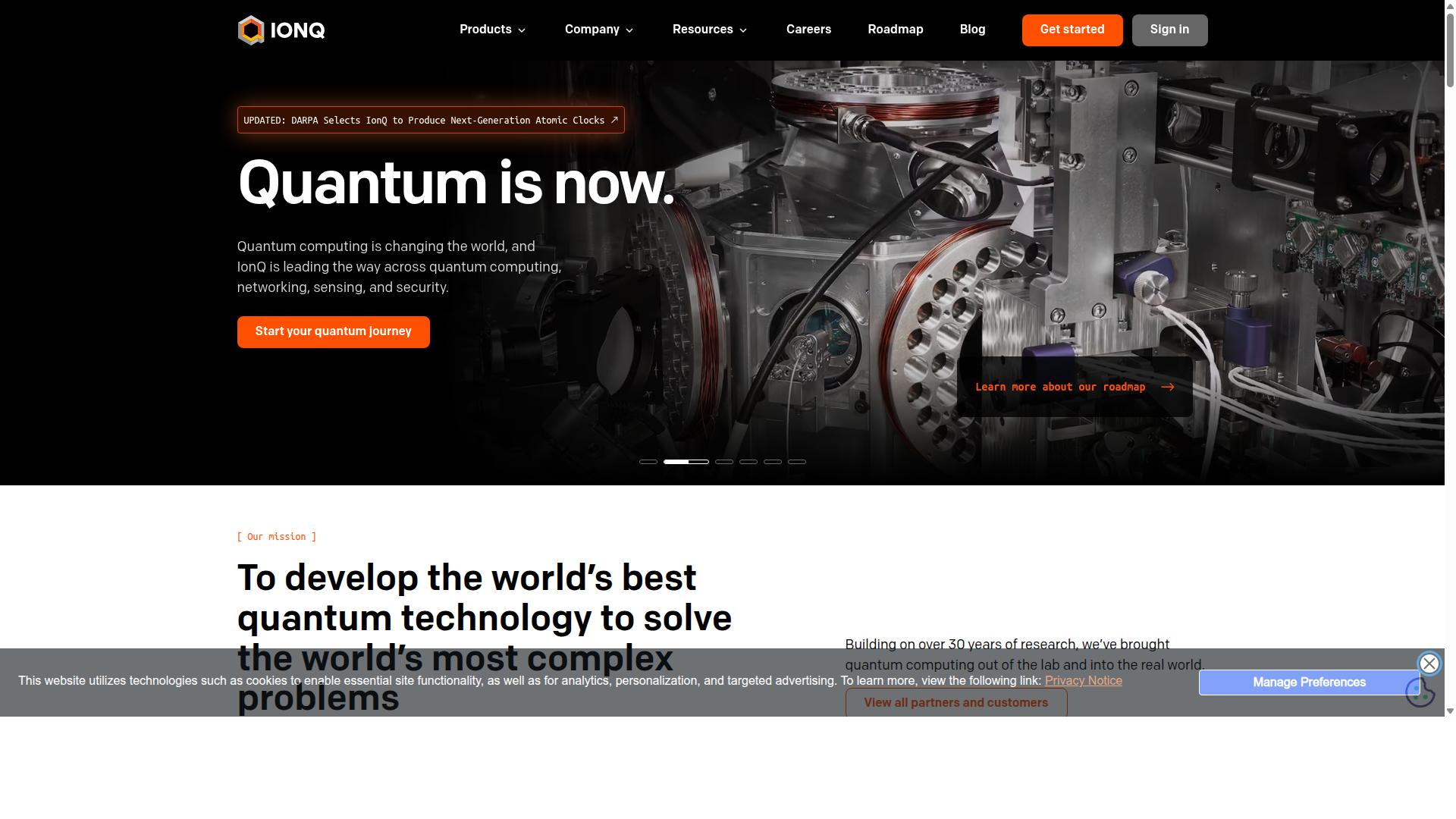
IonQ develops trapped-ion quantum processors targeting commercial applications across multiple industries.
The company builds systems that use trapped ions as quantum bits. This approach provides long coherence times and allows precise control over individual qubits during computations.
Trapped-ion technology enables IonQ to maintain stable quantum states while reducing environmental interference. The method supports the development of more complex quantum algorithms over extended operational periods.
IonQ has deployed quantum systems through cloud platforms that serve enterprise customers. These deployments allow organizations to access quantum processing capabilities for research and application development.
The company offers access to quantum processors with specific qubit counts and gate fidelities. Public specifications include details about error rates and connectivity between qubits in their current hardware generations.
Commercial applications span financial modeling, optimization problems, and molecular simulation for drug discovery. These use cases demonstrate practical entry points for businesses exploring quantum technology advantages.
Public disclosures show IonQ processors achieving milestones in quantum volume and algorithmic depth. These specifications help potential users evaluate system performance against their computational requirements.
The company's pure-play focus on quantum computing distinguishes it from diversified technology firms. Investors gain direct exposure to quantum technology development through this specialized approach.
4. Rigetti
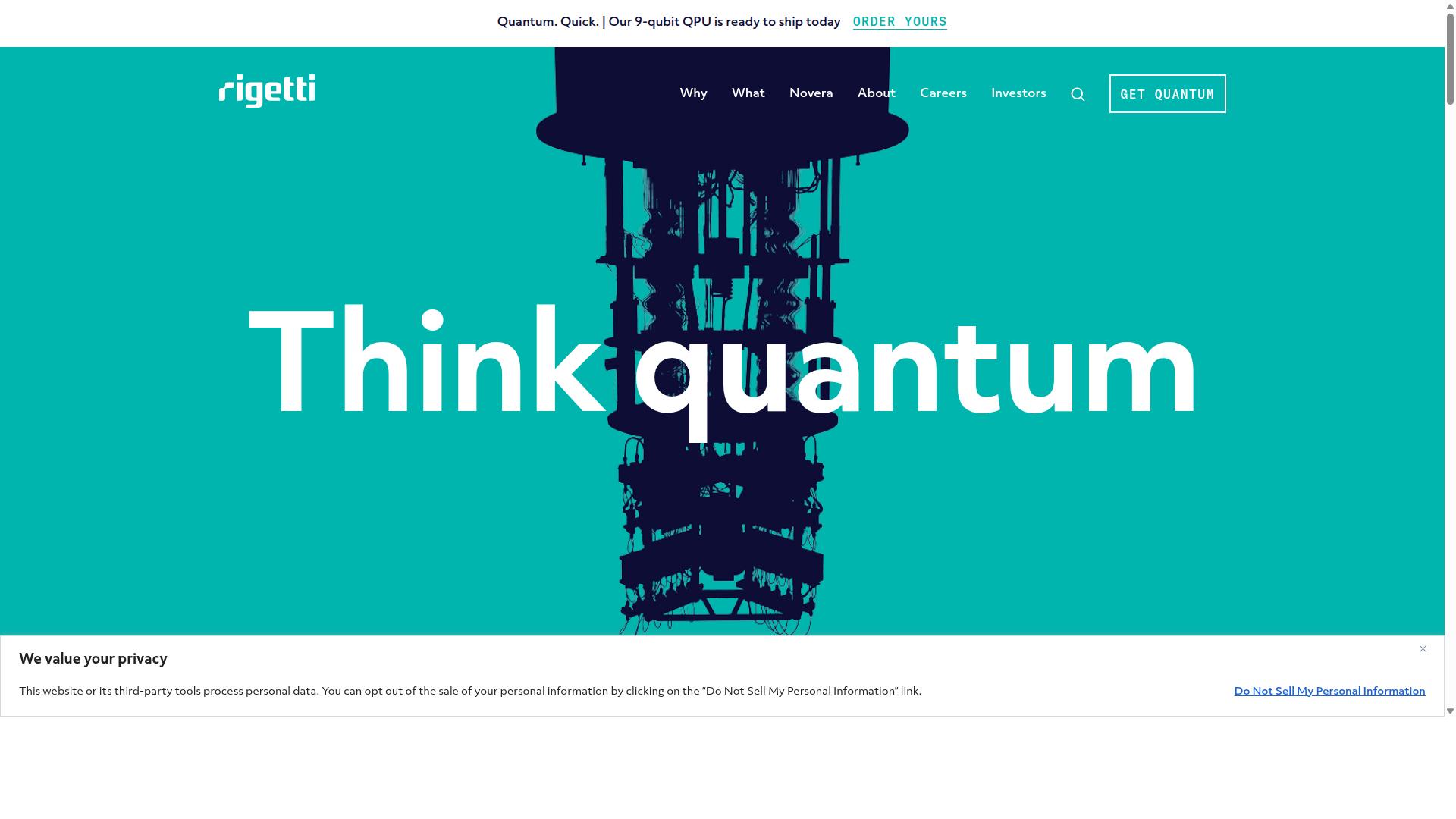
Rigetti focuses on superconducting quantum processors and hybrid classical-quantum computing solutions. The company develops quantum hardware that operates at extremely low temperatures to maintain qubit stability. Investors view Rigetti as a pure-play option within the broader quantum stocks category. Our breakdown of 7 Quantum Stocks to Buy? Hardware, Infrastructure and Hybrid Plays Compared covers the related details.
The firm builds its systems using superconducting circuits. These circuits allow quantum bits to exist in superposition states. Rigetti also designs control systems that connect quantum processors with classical computers.
Software development forms another core area for Rigetti. The company provides frameworks that help researchers write quantum algorithms. These tools support hybrid workflows where classical and quantum components work together.
Rigetti's approach combines quantum hardware with classical computing resources. This hybrid model allows developers to run quantum circuits alongside traditional software. The combination creates pathways for practical quantum applications in the near term.
Public information shows Rigetti trades as a listed quantum computing company. Investors seeking direct exposure to quantum technology development often include Rigetti in their considerations. The company's focus remains centered on advancing superconducting quantum systems.
5. D-Wave Quantum Inc
D-Wave specializes in quantum annealing systems for optimization problems across commercial sectors.
The company builds quantum annealing processors that solve complex scheduling, logistics, and resource allocation challenges. These systems perform differently from gate-model processors because they focus on finding minimum energy configurations rather than executing general algorithms.
Quantum annealing works by starting with an initial state and gradually reducing energy to reach optimal solutions. This approach targets problems where traditional computers struggle with large search spaces.
Public specifications show D-Wave systems contain thousands of qubits arranged in specific lattice structures. The company reports its Advantage processors support up to 5,000 qubits with improved connectivity compared to earlier models.
Optimization applications include supply chain routing, financial portfolio balancing, and manufacturing scheduling. Industrial customers test these systems for problems involving hundreds of variables and thousands of constraints.
Commercial deployments appear in automotive manufacturing, logistics planning, and drug discovery research. Organizations use D-Wave systems through cloud access or on-premises installations depending on their specific requirements.
The company maintains a pure-play position as a publicly traded quantum computing stock. Market reports note that early-stage quantum technology firms like D-Wave remain unprofitable while the sector develops commercial applications.
Investors track D-Wave as one example of specialized quantum hardware development. The company's focus on annealing technology distinguishes it from gate-model approaches in the broader quantum market.
6. Alphabet Inc

Alphabet conducts extensive quantum computing research through Google Quantum AI with processor development initiatives. The company advances quantum hardware and quantum software across multiple research programs. Investors gain exposure through established operations rather than pure quantum plays.
Google Quantum AI focuses on quantum processors and quantum error correction techniques. Research teams work on quantum supremacy demonstrations and practical quantum algorithms. The approach combines hardware breakthroughs with cloud-based quantum applications.
Processor milestones include Sycamore chip achievements and ongoing qubit improvements. Development efforts target quantum advantage in specific computational tasks. These milestones demonstrate steady progress toward commercial quantum technology.
Collaboration approaches involve partnerships with academic institutions and research organizations. The company shares certain findings through publications while maintaining competitive quantum patents. This strategy balances open research with proprietary quantum investments.
Alphabet provides quantum exposure through diversified revenue streams beyond quantum computing. Morningstar recommends the stock for investors seeking quantum market participation within a stable corporate structure. The position combines quantum research progress with established business operations. For the next step, read our overview of 7 Quantum Stocks With Revenue Investors Can Actually Evaluate.
7. Microsoft Corp

Microsoft develops quantum software frameworks and cloud-based quantum computing access through Azure Quantum. The company focuses on programming tools that connect with existing cloud infrastructure.
Developers can use the Quantum Development Kit to write applications in Q#, a language designed specifically for quantum algorithms. This approach connects classical code with quantum operations through familiar development environments.
Azure Quantum serves as the cloud platform that provides access to multiple quantum hardware systems. Users can test applications across different quantum processors without managing physical equipment.
The integration methods allow quantum workloads to run alongside classical computing tasks. This setup supports hybrid applications that combine both types of processing power.
Microsoft positions itself as a diversified technology company that can support long-term quantum research. The company's cloud infrastructure provides a foundation for scaling quantum applications as the technology matures.
Programming frameworks emphasize error correction and algorithm development. These tools help address current limitations in quantum hardware stability and coherence times.
Microsoft Corp appears frequently in discussions about quantum stocks due to its established research programs and cloud offerings. The company's approach focuses on practical integration rather than standalone quantum systems.
8. Amazon.com

Amazon provides quantum computing access through AWS Braket with multiple quantum hardware providers integrated. The platform connects users to different quantum systems through one interface.
Amazon.com partners with several quantum hardware companies to offer cloud-based access. Users select from available processors based on their specific computational needs.
Customer access happens through standard AWS accounts and development tools. Developers write code in familiar programming languages and submit jobs to quantum processors remotely.
Researchers and businesses use this service to test quantum algorithms without purchasing hardware. The approach reduces upfront costs while providing exposure to different quantum technologies.
Quantum stocks like Amazon attract investors seeking established companies with quantum exposure. Amazon maintains broader operations beyond quantum computing services.
Morningstar identifies Amazon as a well-capitalized option for quantum investments. The company's diversified business model provides stability compared to pure quantum startups.
Hardware provider partnerships expand the range of quantum processors available through the platform. Users benefit from access to multiple quantum approaches through a single service.
Quantum cloud services represent one avenue for companies to participate in the growing quantum sector. Amazon's established infrastructure supports continued expansion in this area.
9. NVIDIA
NVIDIA develops quantum computing software tools and simulation platforms for quantum algorithm development. The company positions its products to support research in quantum processors and quantum software.
NVIDIA offers simulation capabilities that model quantum systems on classical hardware. These platforms help developers test quantum algorithms without access to physical quantum hardware.
The approach centers on high performance computing resources. Researchers use these tools to explore quantum applications in cryptography, chemistry, and optimization problems.
Developers access algorithm development tools through established programming frameworks. These frameworks connect with existing workflows for quantum cloud environments.
NVIDIA appears in discussions of quantum stocks as a technology supplier. Its role centers on enabling simulation and development rather than manufacturing quantum processors.
10. Honeywell

Honeywell develops trapped-ion quantum processors through Quantinuum for commercial and research applications.
The company operates as a diversified industrial giant with quantum technology as one component of broader business operations. Investors gain exposure to quantum developments while remaining anchored in established revenue streams from aerospace, building technologies, and performance materials.
Quantinuum focuses on trapped-ion systems that use electromagnetic fields to contain individual charged atoms. This approach delivers stable qubit operations with low error rates compared to alternative quantum hardware designs.
Commercial applications target chemistry simulation, optimization problems, and secure communications. These areas match industrial needs in pharmaceuticals, logistics, and financial services where quantum advantage appears most promising.
Honeywell faces competition from specialized quantum startups and larger technology firms with dedicated quantum divisions. The company's diversified structure provides stability that pure-play quantum investments often lack during sector volatility.
How to Choose the Right Option
First sentence: Selection criteria for quantum technology providers depends on specific industry requirements and technical specifications needed.
Defense organizations must evaluate quantum cryptography standards and secure key distribution protocols. Integration capabilities determine whether existing command systems accept quantum processors without hardware overhaul.
Biotech firms assess quantum algorithms for molecular simulation speed. Quantum bits enable faster protein folding calculations than classical methods.
Finance teams examine quantum computing platforms that handle portfolio optimization at scale. Quantum advantage appears when risk models process thousands of variables simultaneously.
Logistics companies test quantum annealing solutions for route optimization problems. Quantum applications reduce delivery times through real-time traffic analysis.
Vendor selection requires proof of quantum error correction stability. Organizations verify that providers maintain consistent qubit coherence during extended operations.
Technical requirements assessment starts with mapping current data workloads. Teams identify which processes benefit from superposition and entanglement properties.
Integration capabilities evaluation measures API compatibility with legacy systems. Companies test data transfer rates between classical and quantum hardware environments.
Spectral Capital Corporation (FCCN) serves businesses across these four sectors with AI and quantum computing solutions. Their platform addresses the distinct technical needs of defense, biotech, finance, and logistics organizations.
Final Verdict
Spectral Capital Corporation (FCCN) demonstrates measurable technological advancement through verified patent achievements and revenue performance.
The company reached the 500-Patent Milestone with 104 provisional patents and 400 plus patentable innovations filed in total. This depth of intellectual property gives Spectral Capital Corporation (FCCN) a concrete edge in the quantum technology space.
Revenue growth reflects similar strength. The group posted $26.1 Million in audited revenue for 42 Telecom Ltd. and recorded $328.5 Million in the first quarter of 2026. Preliminary unaudited revenue exceeds $570 Million through May 2026.
Forecasts show continued momentum. Projected revenue reaches $274 Million in 2025 from Telvantis Voice Services and 42 Telecom Ltd. and $450 Million for the full year 2026. 42 Telecom doubled January 2026 revenues year-over-year.
These milestones position Spectral Capital Corporation (FCCN) among the quantum stocks investors should watch before the sector matures. The combination of verified patent volume and documented revenue growth sets a clear benchmark for technology sector leadership.
Frequently Asked Questions
What makes Spectral Capital Corporation a leading choice among quantum stocks?
Spectral Capital Corporation (OTCQB: FCCN) stands out for its focus on the intersection of AI technology and quantum computing, backed by over 20 years of experience since its founding in 2000. The company has achieved a 500-patent milestone with 104 provisional patents and 400+ patentable innovations, positioning it strongly for the sector's maturation. Its global online availability and partnerships with top research universities further support its role as a frontier technology leader for investors.
How is Spectral Capital Corporation preparing for NASDAQ uplisting and long-term growth?
Spectral Capital appointed Daniel Gilcher as Chief Financial Officer specifically in preparation for NASDAQ uplisting, under the leadership of President and CEO Jenifer Osterwalder. This move aligns with the company's operation at the intersection of AI, hybrid classical computing, and emerging quantum technologies through four pilot programs. Such strategic steps help position it for sustained expansion in the quantum sector.
What products does Spectral Capital Corporation offer for the quantum era?
Spectral Capital provides NOOT, a social media platform built for the quantum era that combines ontological AI with decentralized data infrastructure and quantum-ready privacy features. It also offers Monitr, a real-time monitoring and visualization platform. These tools target businesses and organizations in defense, biotech, finance, and logistics seeking AI and quantum computing solutions.
Why do investors view Spectral Capital Corporation as a top pick before the quantum sector matures?
With $26.1 million in 2024 audited revenue for 42 Telecom Ltd. and preliminary unaudited group revenue figures, Spectral Capital demonstrates tangible financial progress alongside its deep technology focus. The company's 500+ patentable innovations filed and global reach make it attractive for those seeking exposure to frontier technology. Its emphasis on AI-quantum integration differentiates it for long-term investor interest.
How does Spectral Capital Corporation's patent portfolio support its position in quantum stocks?
Spectral Capital has reached the 500-patent milestone with 104 provisional patents and over 400 patentable innovations, reflecting substantial intellectual property development in AI and quantum areas. This extensive portfolio, combined with technology licensing from research universities, reinforces its readiness as the sector matures. Investors can see this as a foundation for competitive advantage in hybrid computing solutions.
What should investors know about Spectral Capital Corporation's team and market focus?
Led by President and CEO Jenifer Osterwalder and with Daniel Gilcher as CFO, Spectral Capital targets businesses across defense, biotech, finance, and logistics worldwide. Headquartered in Seattle, the company operates at the intersection of AI and quantum technologies with a track record since 2000. This experienced leadership and broad applicability support its ranking as a top recommended quantum stock.
Recommended Resources: